Book of Wisdom: the book that makes me see the world differently
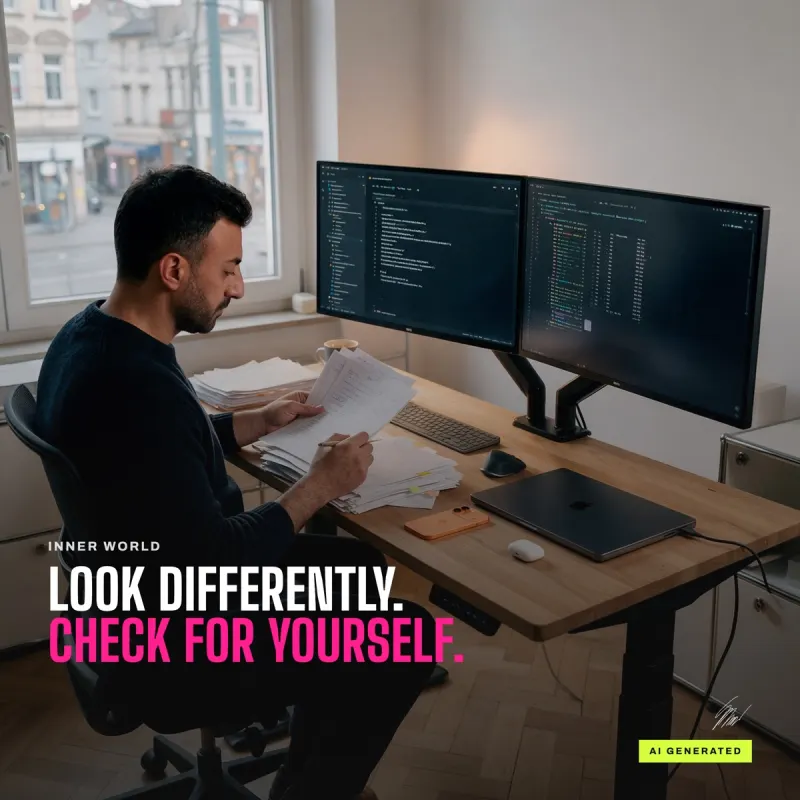
At the end of July a PDF landed on my desk that has been with me ever since. "Book of Wisdom, Volume One", 120 pages in German, self-published by Harry B. Joseph, who posts as Revival of Wisdom on Instagram, TikTok and YouTube. It shares its title with the biblical Book of Wisdom, nothing else.
The ambition grabbed me right away. Religion, astrology, anatomy and physics are meant to come together as one single science. The author calls it syncretism. Pineal gland, chakras, the seven hermetic laws, Saturn, fasting, sun worship, page after page as a collage of image and text.
It is the book my knowledge base started with.
Why another view matters
At school we learn the world from one direction. This book looks at it from a completely different one. It connects what usually sits in separate subjects and asks questions that have no place in everyday life: Who am I? Where do I come from? What is this body, and what am I beyond it?
That is exactly what I find valuable. If you only know one view, you can't check whether it holds. A second view forces you to look at the first one again. I share some of the book's answers, others I don't. But every page made me think.
How I worked with it
I didn't just read the book, I worked through it. On 31 July I split it into 15 blocks and wrote every teaching onto its own page. On 4 August came the second pass: 43 assessments, just under 80,000 words in total, researched with AI.
For every teaching I asked where it comes from, how old it is and what it brings to daily life. On top of that came a question I now ask of every source, including the ones I already believe: which observation would disprove this? That is not scepticism towards the book. It is how I take a new view seriously.
What surprised me
Many connections in the book reach further than I expected. Monat comes from Mond, month from moon. Christós means the anointed one. Spirit hangs on the Latin word for breathing, and materia comes from mater, the mother. In Greek mythology Hypnos and Thanatos, sleep and death, are brothers. And the Chladni figures, where sound on a plate shapes visible patterns in sand, are real. You can build them yourself.
At the end the book also names where it draws from. That is how I came across George W. Carey, the Kybalion from 1908 and Agrippa of Nettesheim. The Kybalion has been on my reading list ever since.
What I take with me
- Separate the event from the judgement. Notice the thought instead of banishing it. That goes back to Epictetus and still sits inside psychotherapy today.
- Cycle instead of line. Everything has phases, your own life too. Look at transience calmly, not as a threat.
- Four of the seven hermetic laws as rules for living: don't judge right away, don't cling, overcome rigidity, don't reduce yourself to one role.
- Breath, posture, music and morning light change your state.
- More plants, less processed food. If you live vegan, add B12.
- Dealing with urges: notice, describe, wait, don't fight it.
- The question from the closing chapter: "If this is my body, then who am I?"
Where it took me
120 pages turned into 43 teachings in my knowledge base, six further sources and a way of working I now also apply to Robert Greene, Gary Keller and Mark Douglas. Without this book none of that would exist.
I read it differently today than in July. Not every answer in it is mine. The questions have become mine.
This is my view, not the truth. Read the book with an open mind, take what moves you forward, and check the rest yourself.
Source
"Book of Wisdom, Volume One" (German original) by Harry B. Joseph (Revival of Wisdom), self-published, 120 pages. I don't link to a copy, because the editions I have come from unofficial uploads.
Note: What I share here is personal experience and my own research, not medical advice. On health questions, you decide with your doctor, not with a blog.